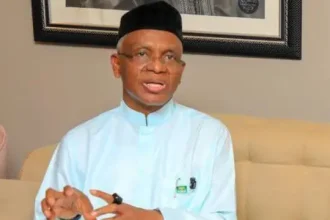


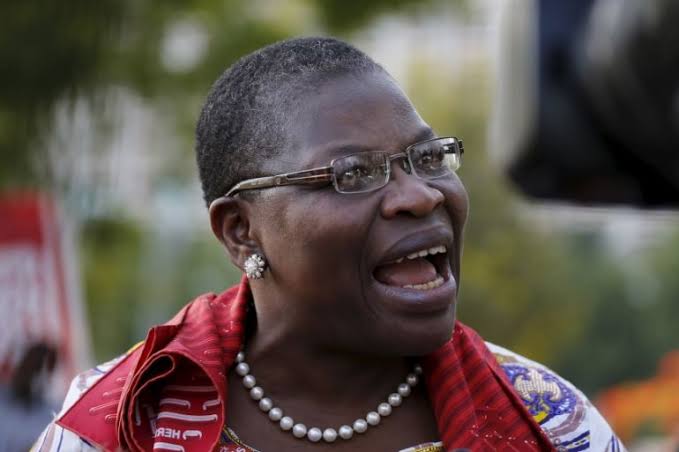
Former Minister of Education and prominent governance advocate, Dr Obiageli Ezekwesili, has renewed calls for the restructuring of Nigeria, arguing that the country can no longer afford to postpone a citizen-driven constitutional process capable of addressing its deep-rooted political, economic and security challenges.
In a public memorandum addressed to Nigerians, the National Assembly and President Bola Tinubu, Ezekwesili contended that Nigeria’s current constitutional framework has become incapable of delivering effective governance, accountability and national cohesion.
The former minister called for a single constitutional amendment that would transfer constitution-making authority from political elites to the Nigerian people and pave the way for a Citizens-Led Sovereign National Conference.
According to her, such a conference would provide a legitimate platform for Nigerians to negotiate the country’s federal structure, fiscal arrangements, security architecture, human rights protections and national identity.
‘Nigeria cannot survive the next decade on this foundation’
Ezekwesili argued that the country’s worsening insecurity, governance failures and recurring political tensions are symptoms of deeper constitutional problems that have remained unresolved for decades.
“Our condition is dire. Our window is narrowing,” she stated.
“The insecurity that now engulfs the country is not merely a failure of policing; it is the predictable outcome of a constitutional order that concentrates power without accountability, centralises authority without capacity, and imposes unity without consent.”
She warned that Nigeria’s long-term stability could be threatened if structural reforms continue to be delayed.
“Nigeria cannot survive the next decade on the foundation of the last one,” she said.
Calls for a people-driven constitutional process
The former vice-presidential candidate insisted that genuine restructuring cannot be achieved through executive policies or incremental reforms implemented by government institutions.
She dismissed suggestions that recent policy changes by the Federal Government amount to restructuring, describing them as inadequate responses to a much deeper constitutional crisis.
According to Ezekwesili, true restructuring requires a transparent, participatory and citizen-owned constitutional process.
She proposed that the outcome of a Sovereign National Conference should ultimately be subjected to a national referendum, allowing Nigerians to directly determine the future structure of their country.
“The demand before us is simple: create the pathway, mandate the conference, submit the draft to a referendum, and let Nigerians decide,” she declared.
Broad representation proposed
Ezekwesili outlined what she described as the minimum requirements for a credible national conference.
She said participation must extend beyond politicians and elected officials to include ethnic nationalities, women, youth groups, labour unions, civil society organisations, traditional institutions, religious communities, persons with disabilities, the private sector and Nigerians in the diaspora.
According to her, such inclusiveness is necessary to prevent what she called “political class capture” and ensure that the process reflects the country’s diversity.
She also stressed that the proceedings should be open to public scrutiny and participation.
Kenya cited as model
Addressing concerns that constitutional restructuring could threaten Nigeria’s unity, Ezekwesili pointed to Kenya’s constitutional referendum of 2010 as an example of how constitutional reforms can strengthen rather than weaken national cohesion.
She argued that constitutional referendums should not be viewed as threats to national stability but as opportunities for citizens to collectively redefine their social contract.
“There is no reason to be paralysed by the fear that a constitutional referendum will unravel Nigeria,” she said.
“Far from it.”
She noted that Kenya emerged from a period of severe ethnic and political tensions through a constitutional process that empowered citizens to reshape the governance structure of their country.
Renewed restructuring debate
Ezekwesili’s intervention comes amid renewed national conversations around constitutional reform, devolution of powers, state policing, fiscal federalism and the future of Nigeria’s federal arrangement.
Calls for restructuring have remained a recurring feature of Nigeria’s political discourse since the return to democratic rule in 1999, with advocates arguing that the country’s highly centralised governance system contributes to insecurity, inefficiency and uneven development.
Successive administrations have acknowledged aspects of the debate but have often differed on the scope and method of implementing reforms.
For Ezekwesili, however, the issue is no longer whether Nigeria should restructure but whether Nigerians are prepared to seize what she described as a historic opportunity to redefine the nation’s future.
“Now is the next best time to reset Nigeria since independence,” she said.
“The answer is in our hands.”
The Conscience Call
Whether one agrees with Dr Ezekwesili’s prescription or not, her intervention forces a conversation Nigeria can no longer avoid. The country faces persistent insecurity, economic fragility, governance challenges and growing public distrust in institutions. The question is no longer whether reforms are necessary, but whether existing political structures are capable of delivering them.
As 2027 approaches, Nigerians will increasingly demand answers to fundamental questions about power, representation, resource control, security and national unity. Those questions cannot be permanently postponed.
Questions for the Nation
- Has Nigeria’s current constitutional arrangement fulfilled its promise after more than two decades of democratic rule?
- Would a sovereign national conference strengthen or weaken national unity?
- Should Nigerians be allowed to approve a new constitutional framework through a referendum?
- Can restructuring address insecurity, economic disparities and governance failures?
- How can constitutional reforms be pursued without deepening ethnic and regional divisions?
- Is the political class willing to surrender some powers to enable a genuinely citizen-driven constitutional process?
The Conscience Times
Nurturing a Conscience-Driven Society