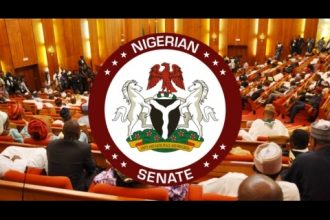



In a major development that could reshape policing and internal security management in Nigeria, the House of Representatives has approved the State Police Bill, advancing efforts to decentralise the country’s policing system amid growing security challenges.
The bill secured overwhelming support during Thursday’s plenary session, with 289 lawmakers voting in favour of the proposal, while only one member opposed it. The session was presided over by the Speaker of the House of Representatives, Rt. Hon. Tajudeen Abbas.
The approval marks a significant milestone in the long-running national debate over the creation of state-controlled police formations as a complement to the existing federal policing structure.
Security Concerns Drive Legislative Action
The House’s decision comes against the backdrop of persistent insecurity across several parts of the country, including rising incidents of kidnapping, banditry, terrorism, and communal violence.
For years, advocates of state policing have argued that a centralised security framework is increasingly stretched by the complex and evolving security threats confronting the nation.
Supporters believe that empowering states to establish and manage police services could improve intelligence gathering, strengthen community policing, and enable faster responses to local security challenges.
The latest legislative action reflects growing calls for reforms aimed at enhancing public safety and improving security governance.
Debate Highlights Concerns Over Process
Despite the overwhelming support recorded during the vote, the process was not entirely without controversy.
Shortly after proceedings commenced, a member representing Kaduna State, Bashir Zubairu, raised concerns over the timing of the circulation of documents related to the proposed legislation.
According to the lawmaker, members had only received the report of the House Committee on Constitution Review shortly before deliberations began, leaving insufficient time for detailed examination of its contents.
He argued that lawmakers should be afforded adequate opportunity to study such a critical proposal before taking a final position.
However, the objection did not alter the course of proceedings, as the Speaker ruled him out of order and allowed consideration of the bill to continue.
Overwhelming Support During Voting
As deliberations progressed, lawmakers considered the relevant provisions before proceeding to the voting stage.
The Speaker informed members that the electronic voting system was unavailable, necessitating an alternative voting process based on attendance records in the chamber.
Out of 290 lawmakers present during the session, 289 voted in support of the bill, demonstrating broad bipartisan backing for the proposed reform.
Only one lawmaker voted against the measure, while the Speaker did not participate in the vote in line with parliamentary convention.
The outcome represents one of the strongest endorsements of a constitutional reform proposal in recent legislative history.
A Turning Point in the State Police Debate
The issue of state police has remained one of the most debated governance and security reforms in Nigeria’s democratic journey.
Proponents argue that decentralising policing would bring security institutions closer to local communities and improve accountability, responsiveness, and intelligence gathering.
Opponents, however, have expressed concerns about the potential misuse of state-controlled police by political authorities, particularly during elections and periods of political tension.
The House’s approval does not end the constitutional process but signals growing political support for restructuring the nation’s security architecture.
Observers say the development could have far-reaching implications for federalism, governance, and public safety if eventually implemented.
The Conscience Call
The overwhelming support for state police in the House of Representatives reflects the urgency many policymakers attach to Nigeria’s security challenges.
As insecurity continues to affect communities across the country, there is increasing recognition that new approaches may be required to complement existing security structures.
However, the success of state policing will depend not only on constitutional approval but also on the establishment of strong safeguards, clear accountability mechanisms, professional standards, and protections against political abuse.
Security reform should ultimately serve the interests of citizens by improving safety, strengthening public trust, and ensuring that law enforcement remains guided by justice, professionalism, and the rule of law.
Questions for the Nation
- Will the creation of state police significantly improve security across Nigeria?
- What safeguards should be put in place to prevent the political misuse of state-controlled police forces?
- How can state police complement rather than conflict with federal security agencies?
- What lessons can Nigeria learn from other federal systems that operate state or regional police services?
- How should funding and oversight of state police be structured to ensure effectiveness and accountability?
The Conscience Times
Nurturing a Conscience-Driven Society