


Twenty-seven years after the return to democratic rule, Nigeria has moved closer than ever to abandoning its exclusive federal policing structure, with the Senate approving a constitutional amendment that could place police powers partly in the hands of governors and fundamentally alter the country’s security architecture.
For more than two decades, it remained one of Nigeria’s most contentious constitutional questions. On Wednesday, the Senate took what could become the most significant step yet toward answering it.
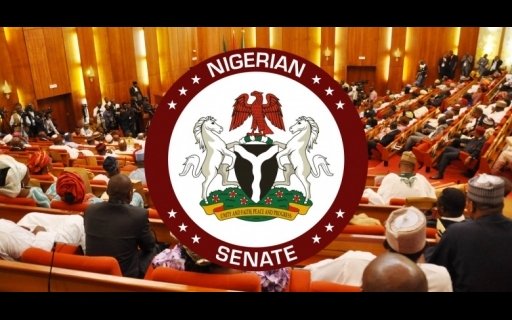
In a historic vote, the Senate passed the Constitution Alteration Bill seeking to establish state police services across the federation, moving the country closer than ever to abandoning its exclusive federal policing model.
The legislation, approved after a clause-by-clause consideration and supported by more than two-thirds of senators, would create a dual policing structure under which federal and state police formations operate side by side.
If eventually ratified through the remaining constitutional processes, the reform could mark one of the most consequential changes to Nigeria’s governance system since the country’s return to democratic rule in 1999.
A response to a nation under siege
The Senate’s decision comes against the backdrop of a prolonged national security crisis that has exposed the limitations of Nigeria’s centrally controlled policing system.
From terrorism in the North-East to banditry in the North-West, farmer-herder conflicts and killer herdsmen attacks in the Middle Belt, separatist violence in the South-East, kidnapping along major highways, and urban criminality across major cities, many Nigerians have increasingly questioned whether a single federal police structure can effectively secure a country of more than 200 million people.
Supporters of state police argue that governors, who are constitutionally designated as chief security officers of their states, currently lack operational control over the police formations expected to maintain law and order within their territories.
For years, advocates have maintained that security decisions are often delayed by bureaucratic chains of command stretching from local communities to state capitals and ultimately to Abuja.
Wednesday’s vote signals growing acceptance within the political establishment that the current model may no longer be sufficient to address evolving security threats.
What the bill proposes
The legislation would establish state police services operating alongside the Nigeria Police Force.
While the Inspector-General of Police would remain head of the federal police system, each state police command would be led by a Commissioner of Police appointed by the governor and confirmed by the state House of Assembly.
The bill empowers governors to issue lawful written directives on matters relating to public safety and public order within their states.
However, conscious of longstanding fears about political interference, lawmakers included provisions designed to prevent abuse of the proposed policing structure.
One of the safeguards specifically prohibits state police commissioners from arresting, detaining, investigating or deploying force against individuals, groups or political parties merely for criticising the government, except in accordance with the law.
The provision reflects concerns repeatedly raised by civil society groups, opposition politicians and constitutional scholars who fear that state police could become instruments of political intimidation.
The fears have not disappeared
Despite widespread support for decentralised policing, the debate surrounding state police has never been solely about security.
It has also been about power.
Critics have long argued that governors already wield enormous influence over state institutions and could potentially use state-controlled police formations to suppress opposition voices, intimidate rivals during elections or weaken democratic accountability.
Nigeria’s history provides fuel for such concerns.
Opponents of state police often point to experiences during the First Republic, when regional governments allegedly deployed local security structures against political opponents.
Those concerns have resurfaced repeatedly whenever the issue of state police is discussed.
Although the Senate incorporated safeguards into the legislation, analysts note that the ultimate effectiveness of those protections will depend largely on institutional independence, judicial oversight and the strength of democratic norms within individual states.
A vote that reveals changing political realities
Perhaps the most remarkable aspect of Wednesday’s development is how dramatically political opinion has shifted.
For years, successive administrations resisted calls for state police, arguing that decentralised policing could threaten national unity.
Today, however, insecurity has altered the political conversation.
Many governors who once expressed reservations now openly support the idea, while increasing numbers of lawmakers view the reform as unavoidable.
The presence of several governors and senior federal officials in the Senate chamber during the vote underscored the significance attached to the proposal.
It also highlighted the growing consensus among political leaders that Nigeria’s security challenges require structural solutions rather than temporary interventions.
What happens next?
The Senate’s approval does not automatically create state police.
The constitutional amendment must still secure the approval of at least two-thirds of the 36 state Houses of Assembly before receiving presidential assent.
That process is expected to trigger fresh debates across the country, particularly around issues of funding, recruitment standards, operational oversight, accountability mechanisms and the relationship between federal and state police authorities.
The discussions are likely to determine not only whether state police eventually emerge, but also what form they will take.
The Conscience Call
Nigeria’s insecurity crisis has become too severe for policymakers to ignore difficult conversations about security reform.
Yet creating state police is only one part of the equation.
The greater challenge may lie in building institutions strong enough to prevent abuse while remaining effective enough to protect citizens.
The question before the country is no longer whether policing should be decentralised.
The real question is whether Nigeria can decentralise policing without decentralising justice, accountability and respect for civil liberties.
Questions for the Nation
- Will state police significantly improve security or simply create another layer of bureaucracy?
- Are the safeguards contained in the bill strong enough to prevent political abuse by state governments?
- How will poorer states fund police services without compromising operational effectiveness?
- What mechanisms should exist to investigate misconduct by state police formations?
- Could the creation of state police strengthen Nigeria’s federal structure or deepen political divisions?
- How can citizens be protected from potential abuse of policing powers at both federal and state levels?
As the bill moves to state legislatures, Nigeria may be entering the final chapter of a constitutional debate that has shaped discussions on security and federalism for more than two decades.
The Conscience Times
Nurturing a Conscience-Driven Society