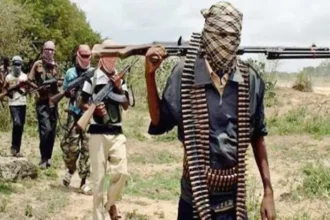


Few issues have generated as much public anger and moral unease in recent years as the Federal Government’s policy of rehabilitating and reintegrating former terrorists. What was once a relatively obscure component of Nigeria’s counterterrorism strategy has increasingly become the subject of national debate, particularly as insecurity continues to claim lives across different parts of the country.
That debate has now been reignited by the Senate’s recent call for the suspension of terrorist rehabilitation and reintegration programmes. The upper chamber’s intervention reflects a growing concern among many Nigerians who question whether the country has struck the right balance between seeking to reform former insurgents and delivering justice to their victims.
At the heart of the controversy lies a simple but uncomfortable question: Has Nigeria become more concerned about rehabilitating terrorists than rehabilitating those whose lives have been destroyed by terrorism?
The question may sound harsh. Yet it deserves an honest answer.
The philosophy behind deradicalisation
To be fair, the idea of rehabilitating former terrorists is not inherently flawed.
Around the world, governments have recognised that military force alone cannot completely defeat violent extremism. Terrorist organisations thrive not only on weapons but also on ideology, propaganda, recruitment and social influence. Consequently, several countries have developed deradicalisation programmes aimed at persuading extremists to abandon violence and reintegrate into society.
The theory is straightforward. Every terrorist who genuinely renounces violence potentially weakens a terrorist network. Every successful reintegration reduces the pool of recruits available to extremist groups. Every defection can provide valuable intelligence that helps security agencies prevent future attacks.
In principle, therefore, rehabilitation can be an important component of a broader security strategy.
However, what works in theory does not always work in practice.
More importantly, what works in one country does not automatically work in another.
Nigeria’s reality is different
Supporters of rehabilitation programmes often point to examples from countries such as Saudi Arabia, Singapore and Indonesia.
While these examples deserve consideration, Nigeria’s security environment is far more complex and volatile.
Nigeria is simultaneously battling terrorism, banditry, kidnapping, organised crime, communal conflicts and violent extremism across multiple regions. Large areas remain vulnerable to criminal attacks. Thousands of citizens are still displaced from their homes. Entire communities continue to live under the shadow of insecurity.
Unlike some countries where deradicalisation programmes were introduced after security conditions had largely stabilised, Nigeria is attempting to reintegrate former terrorists while active terrorist networks remain operational and dangerous.
This distinction is significant.
A rehabilitation programme implemented during a period of relative peace carries one set of risks.
A rehabilitation programme implemented while terrorism remains an ongoing threat carries an entirely different set of risks.
The consequences of failure are far greater.
The unanswered questions
One of the greatest weaknesses of Nigeria’s rehabilitation policy is the lack of transparency surrounding it.
For years, Nigerians have been asked to trust the process.
Yet several critical questions remain unanswered.
How many terrorists have passed through rehabilitation programmes?
How many have been successfully reintegrated?
How many remain under monitoring?
How many have returned to criminal activity?
What criteria are used to determine who qualifies for rehabilitation?
How are communities prepared before former insurgents are returned to them?
How much public money has been spent on these programmes?
These are not unreasonable questions.
They are questions that every responsible government should be able to answer.
Unfortunately, clear and comprehensive information is often difficult to obtain.
In the absence of transparency, suspicion naturally grows.
Public trust cannot be sustained by assurances alone.
It must be supported by evidence.
If rehabilitation programmes are genuinely producing positive outcomes, the government should have no difficulty publishing regular reports demonstrating their effectiveness.
If such evidence exists, Nigerians deserve to see it.
The victims who seem forgotten
Perhaps the strongest argument against the current approach is not even a security argument.
It is a moral one.
Across the North-East and other conflict-affected regions, countless Nigerians continue to bear the scars of terrorism.
Thousands have lost spouses, children, parents and siblings.
Many have suffered life-changing injuries.
Millions have been displaced at various points during the insurgency.
Businesses have collapsed.
Schools have been destroyed.
Entire communities have been uprooted.
Many survivors continue to struggle with trauma, poverty and uncertainty.
For these citizens, the wounds of terrorism are not historical events.
They are daily realities.
Yet many of them watch as discussions about rehabilitation focus overwhelmingly on the welfare and future prospects of former terrorists.
They hear about counselling programmes.
They hear about vocational training.
They hear about reintegration support.
They hear about second chances.
And they understandably ask:
Where is our own support?
Where is the counselling for widows?
Where is the rehabilitation for traumatised children?
Where is the reintegration for communities that have lost everything?
Where is the economic recovery for those whose livelihoods were destroyed?
No nation can afford to create the impression that perpetrators receive greater attention than victims.
Justice must not only be done; it must also be seen to be done.
The security risk Nigeria cannot ignore
Beyond questions of fairness lies a more urgent concern.
Security.
Over the years, reports have emerged from various quarters alleging that some individuals previously described as repentant insurgents later returned to criminal activities or acted as informants for active terrorist groups.
Whether every allegation is accurate is not the central issue.
The critical point is that even a small number of failures can have devastating consequences.
Counterterrorism is not like ordinary social policy.
A failed education policy may affect academic outcomes.
A failed agricultural policy may affect food production.
A failed rehabilitation policy can cost lives.
One former insurgent who returns to violent extremism can facilitate attacks that kill dozens or even hundreds of innocent people.
The margin for error is extremely narrow.
This reality imposes a higher burden of proof on those advocating rehabilitation.
The question should never be whether rehabilitation sounds compassionate.
The question should be whether it demonstrably enhances public safety.
If the answer remains uncertain, caution becomes imperative.
Mercy versus justice
This debate ultimately forces Nigeria to confront a difficult ethical dilemma.
Can a society extend mercy to those who once sought to destroy it?
The answer is yes.
Indeed, forgiveness and redemption are values embraced by many religious and moral traditions.
However, mercy cannot exist in isolation from justice.
Neither can it exist independently of security.
A responsible government must balance compassion with accountability.
It must balance reconciliation with deterrence.
It must balance rehabilitation with public safety.
The danger arises when these priorities become inverted.
A government’s first obligation is not to the terrorist.
Its first obligation is to the innocent citizen.
Its first obligation is to the farmer afraid to visit his fields.
Its first obligation is to the child unable to attend school because of insecurity.
Its first obligation is to the family mourning loved ones lost to violence.
Any policy that appears to reverse that order risks losing public legitimacy.
What should Nigeria do now?
Rather than continuing the current approach without scrutiny, the Federal Government should undertake a comprehensive review of all rehabilitation and reintegration initiatives.
1. Conduct an independent audit
An independent panel comprising security experts, civil society representatives, victims’ groups and relevant stakeholders should evaluate the effectiveness of existing programmes.
The findings should be made public.
2. Publish annual performance reports
Nigerians deserve regular updates on the outcomes of rehabilitation programmes.
Transparency builds trust.
Secrecy breeds suspicion.
3. Prioritise victims
For every naira spent on rehabilitating former terrorists, substantial resources should be allocated to victims and affected communities.
A nation cannot rebuild itself while neglecting those who have suffered most.
At least 60 per cent of all funds dedicated to post-conflict recovery should directly support victims, displaced persons and community reconstruction.
4. Require community consent
Communities should not be compelled to accept former insurgents without adequate consultation and preparation.
Local voices matter.
5. Strengthen monitoring mechanisms
Any former terrorist released into society should remain subject to robust monitoring and evaluation measures.
Public safety must remain paramount.
6. Distinguish between categories of offenders
Individuals involved in mass killings, kidnappings, sexual violence and other grave atrocities should face prosecution in accordance with the law.
Not every terrorist should be treated identically.
7. Strengthen parliamentary oversight
The National Assembly should regularly review the implementation and outcomes of rehabilitation programmes to ensure accountability.
The Conscience Verdict
The Conscience Times recognises that terrorism is a complex challenge requiring a combination of military, political, social and ideological responses.
However, complexity should never become an excuse for avoiding hard questions.
The burden of proof rests squarely on those who advocate rehabilitation.
They must demonstrate that the programme works.
They must demonstrate that it improves security.
They must demonstrate that it does not endanger innocent lives.
And they must demonstrate that victims are not being forgotten.
Until that burden is met, the concerns being raised by many Nigerians—and now by the Senate—cannot be dismissed.
Compassion is noble.
Forgiveness has its place.
Redemption is possible.
But the first duty of the Nigerian state is not to rehabilitate terrorists.
The first duty of the Nigerian state is to protect Nigerians.
The Conscience Call
A government that asks citizens to trust a rehabilitation programme must provide evidence that the programme is achieving its objectives.
Nigeria should immediately review its deradicalisation strategy, publish verifiable performance data and ensure that victims receive at least the same level of attention, support and commitment currently devoted to former insurgents.
National security policy must inspire confidence among law-abiding citizens before it seeks sympathy for those who once threatened the nation’s peace.
Questions for the Nation
- Has Nigeria’s terrorist rehabilitation programme made the country safer?
- Should the programme be suspended pending an independent audit?
- Why do many victims of terrorism feel neglected compared to former insurgents?
- Should communities have a right to reject the reintegration of former terrorists?
- How should Nigeria balance mercy, justice and national security?
- Should individuals involved in serious terrorist atrocities ever qualify for rehabilitation?