

Nigeria’s worsening security crisis has come under renewed scrutiny after fresh data revealed that security agencies recorded 98 violent incidents across the country within a single week, despite a significant increase in federal spending on security-related projects and operations.
An analysis of government expenditure records shows that the Federal Government spent N57.78 billion on security infrastructure, defence equipment and related projects during the first four months of 2026—a sharp increase from the N25.35 billion spent during the same period last year.
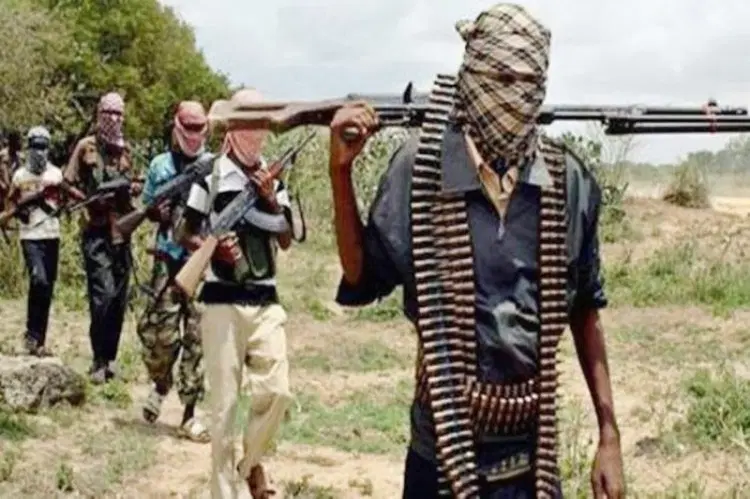
Yet, across several states, attacks by bandits, kidnappers, terrorists and armed criminal groups continue to exact a heavy toll on communities, travellers and security personnel.
Security spending more than doubles
Data from the Open Treasury Portal indicates that security-related expenditure between January and April 2026 rose by nearly 128 per cent compared to the corresponding period in 2025.
The largest portion of the spending was directed towards defence equipment procurement, which accounted for more than one-third of total security expenditure during the period.
Additional funds were allocated to the acquisition of security equipment, construction and rehabilitation of military barracks, police facilities and defence infrastructure.
Government records also show spending on routine security operations and security services across various agencies.
However, despite the increase in expenditure, implementation levels remain relatively low when measured against the total security allocation approved for the year.
Of the N4.66 trillion earmarked for security in the 2026 budget, only about 1.24 per cent had been utilised by the end of April.
Several critical programmes, including military operational funding and personnel equipment procurement, reportedly recorded little or no disbursement during the period under review.
Police report reveals scale of violence
The spending figures emerged as a police security assessment highlighted the continuing scale of insecurity nationwide.
According to the report, security agencies recorded no fewer than 98 criminal incidents within seven days.
The incidents included homicide cases, bandit attacks, kidnappings, armed robberies and terrorism-related offences across multiple states.
Communities in parts of Kaduna, Katsina, Zamfara, Kebbi and other states were among those affected by attacks, abductions and violent criminal activities.
The report paints a picture of persistent insecurity despite ongoing military operations and government interventions.
Zamfara peace mission ends in fresh abductions
Among the incidents attracting national attention was the abduction of dozens of residents in Zamfara State.
The victims were reportedly seized after travelling into a forest area to engage in peace discussions with a notorious bandit leader.
The development has raised fresh concerns about the risks associated with informal negotiations between communities and criminal groups operating across the North-West.
In Katsina State, another incident saw armed bandits reportedly intercept a commercial vehicle along the Katsina-Kankara road.
While security operatives later rescued several passengers, some victims remained unaccounted for as investigations continued.
Analysts question effectiveness of current strategy
The latest figures have prompted renewed debate among security experts regarding the effectiveness of Nigeria’s current approach to combating insecurity.
Security analyst Lekan Jackson-Ojo described the situation as one of the most serious security challenges the country has faced in recent history.
According to him, the continued attacks, kidnappings and killings are damaging public confidence and undermining economic growth.
He also expressed concern over recent incidents involving senior military figures, arguing that attacks on retired generals and security personnel signal a troubling escalation in the activities of criminal groups.
Jackson-Ojo further questioned the policy of reintegrating repentant terrorists into society, insisting that stronger deterrent measures are required.
Military overstretched, says expert
Another security analyst, Chidi Omeje, argued that the scale of Nigeria’s security challenges has stretched military resources across multiple operational theatres.
He noted that modern military operations require significant financial commitments, including the deployment of specialised vehicles, surveillance platforms and aircraft.
According to Omeje, increased spending alone may not be enough to address the crisis if underlying social and economic conditions remain unresolved.
He identified poverty, corruption, poor governance and youth unemployment among the factors contributing to criminality and recruitment into armed groups.
The analyst also pointed to porous borders and instability across parts of the Sahel region as major factors fuelling insecurity within Nigeria.
Growing concern over security outcomes
The latest figures have intensified questions about the relationship between government spending and security outcomes.
While authorities have continued to invest heavily in defence infrastructure and equipment, communities across several regions continue to face attacks, abductions and other violent crimes.
For many observers, the challenge is no longer simply the amount of money allocated to security but how effectively those resources are deployed to deliver measurable improvements in public safety.
As the country confronts persistent threats from bandits, terrorists and organised criminal networks, calls are growing for greater accountability, stronger intelligence gathering and a more coordinated national security strategy.
The Conscience Call
Security spending should ultimately be measured not by the amount allocated or disbursed but by the level of safety experienced by citizens.
When violent incidents continue to occur at alarming levels despite increased expenditure, it becomes necessary to examine not only how much is being spent but also how effectively resources are being utilised.
Nigeria’s security challenge requires more than funding. It demands strategic leadership, intelligence-driven operations, accountability, border management, community participation and sustained efforts to address the economic and social conditions that enable criminality to thrive.
Questions for the Nation
- Why does insecurity remain widespread despite increased security spending?
- Are security allocations being deployed efficiently and transparently?
- Should government place greater emphasis on intelligence gathering rather than kinetic operations alone?
- How can Nigeria better address the root causes of banditry, terrorism and kidnapping?
- What measurable benchmarks should citizens use to assess security performance?
The Conscience Times
Nurturing a Conscience-Driven Society