

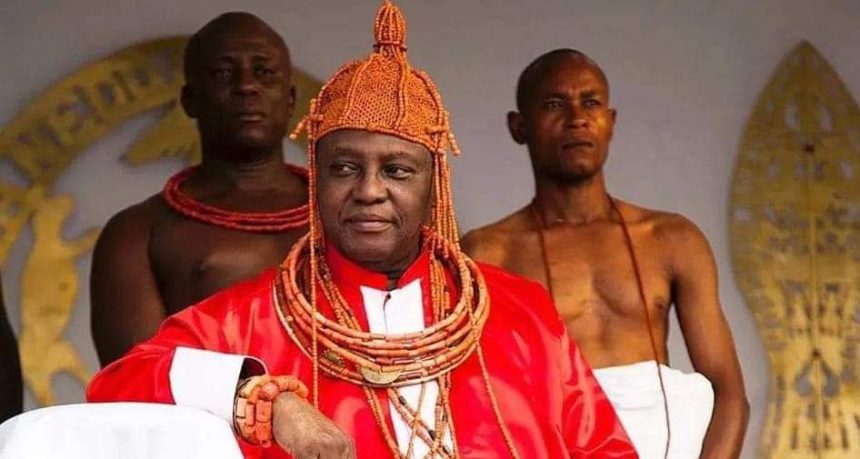
The Oba of Benin, Oba Ewuare II, has summoned native doctors, traditional priests and priestesses across the Benin Kingdom to an emergency meeting as concerns mount over worsening insecurity in Edo State and across Nigeria.
The rare intervention by one of Nigeria’s most influential traditional rulers comes amid growing public anxiety over kidnappings, cult-related violence and other criminal activities that have continued to challenge security agencies in parts of the country.
According to a statement issued by the Benin Traditional Council (BTC), the meeting will be held at the Oba’s Palace on Tuesday, June 23, 2026.
The statement, signed by Chief Victor Nosakhare on behalf of the Secretary of the Benin Traditional Council, Frank Irabor, said the monarch had decided to mobilise traditional institutions and spiritual custodians as part of broader efforts to support ongoing government initiatives aimed at restoring peace and security.
“Having taken due cognisance of the prevailing security situation within Edo State and the nation at large, His Royal Majesty has deemed it necessary and expedient to further explore all traditional and strategic means to complement the initiatives of government towards the restoration of peace, order and security in our domain,” the statement said.
Palace mobilises traditional institutions
The emergency gathering will bring together Igiohen N’Ikpia and Igiohen N’Ikhuo—traditional doctors, priests and priestesses recognised within the Benin Kingdom.
Palace authorities described the meeting as one that should be treated with utmost urgency, signalling the seriousness with which the Benin throne views the security challenges confronting the state.
Observers note that traditional institutions have historically played significant roles in maintaining social order, resolving communal disputes and enforcing cultural norms within many Nigerian communities.
Youth leaders next on the agenda
In what appears to be a broader security engagement strategy, the Benin Traditional Council also announced a separate meeting with Okaighele, youth leaders and community representatives across the kingdom.
The meeting is scheduled for Wednesday, June 24, at the Oba’s Palace.
The move suggests an effort by the palace to bring together both traditional and community-based structures in support of measures aimed at curbing criminality and strengthening local vigilance.
Traditional institutions enter security conversation
The intervention by Oba Ewuare II comes at a time when many communities across Nigeria are increasingly looking beyond conventional security approaches as incidents of kidnapping, violent crime and communal insecurity persist.
While security remains primarily the responsibility of government and law enforcement agencies, traditional rulers have often leveraged their influence, grassroots reach and cultural authority to support peacebuilding efforts and community mobilisation.
The latest move by the Benin monarch is likely to spark national conversation about the role traditional institutions can play in addressing contemporary security challenges.
For many residents, the emergency meetings represent a recognition that the fight against insecurity requires not only military and police action but also the active participation of community leaders, traditional authorities and local stakeholders.
The Conscience Call
When traditional rulers begin convening emergency security meetings, it is often a reflection of the depth of public concern.
The decision by Oba Ewuare II to summon native doctors, traditional priests, priestesses and youth leaders is significant because it acknowledges a reality many Nigerians already know: insecurity can no longer be viewed solely through the lens of policing and military operations.
Communities remain the first line of defence against criminality. Traditional institutions possess local intelligence networks, cultural authority and social influence that governments often lack. These assets should be harnessed responsibly and lawfully in support of national security objectives.
However, the bigger question remains: why are citizens increasingly looking to traditional institutions for solutions that modern state structures should ordinarily provide?
The answer lies in the urgent need to strengthen security institutions, improve intelligence gathering, secure vulnerable communities and restore public confidence in the state’s ability to protect lives and property.
Questions for the Nation
- What role should traditional rulers play in addressing Nigeria’s growing insecurity?
- Can community-based intelligence networks help security agencies tackle kidnapping and violent crime more effectively?
- Why do many communities increasingly look beyond government institutions for protection?
- How can traditional institutions support security efforts without undermining the rule of law?
- What additional measures are needed to reverse the rising tide of kidnappings and violent crime across Nigeria?
The Conscience Times
Nurturing a Conscience-Driven Society