

The Muslim Community of Oyo State has strongly condemned attempts by terrorists holding abducted teachers and pupils in Oriire Local Government Area to justify their actions through religious demands, declaring that the criminals neither represent Islam nor speak on behalf of Muslims.
The condemnation comes amid growing anxiety over the fate of the captives, who have remained in the custody of their abductors for more than three weeks, and as public and private schools across Oyo State shut down in solidarity with the victims.
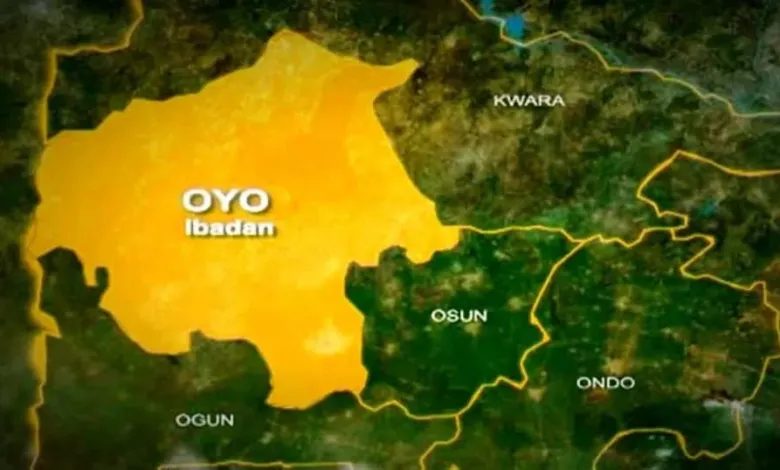
The abductees were taken on May 15 when armed terrorists attacked schools in the Esiele, Yawota, and Alawusa communities of Oriire Local Government Area.
Reports indicate that the kidnappers have demanded the release of detained terrorist commanders, payment of ransom, provision of two Hilux vehicles, and the implementation of Sharia-related conditions before the victims can regain their freedom.
In a statement jointly signed by its Chairman, Alhaji Ishaq Sanvni, and Secretary-General, Alhaji Murisiku Siyanbade, the Muslim Community of Oyo State distanced Islam from the demands reportedly made by the abductors.
The organisation described the terrorists’ actions as criminal, stressing that any attempt to use religion as justification amounted to a gross distortion of Islamic teachings.
“Islam forbids kidnapping, terrorism and the extortion of innocent citizens,” the statement said.
The group noted that authentic Sharia principles are founded on justice, peace, and the sanctity of human life, values that stand in direct contradiction to terrorism and violent extremism.
“Legitimate Sharia promotes justice, peace and the sanctity of human life, values that stand in direct opposition to the activities of criminal groups.”
The Muslim community further emphasised that terrorists could not claim to represent Muslims or Islamic values.
“Terrorists do not represent Islamic values and cannot speak for Muslims,” the statement added.
Referencing Qur’an Chapter 5 Verse 32, the organisation reiterated Islam’s emphasis on the protection of human life and called on security agencies to intensify efforts to secure the safe release of those being held captive.
Schools Shut Down Across Oyo
As concern continues to mount, schools across Oyo State have taken the extraordinary step of suspending academic activities in solidarity with the abducted teachers and pupils.
Investigations revealed that private school operators directed schools to close from Friday, June 5, citing security concerns and the need to pray for the safe return of the victims.
One internal memo circulated among schools stated:
“Due to the situation at hand and the ongoing protest in the state, all pupils and students should stay at home until further notice.”
Similarly, the Ibadan District Chairman of the National Association of Proprietors of Private Schools (NAPPS), Joshua Olaoluwa, urged member schools to suspend operations as a mark of solidarity.
According to the directive, the closure was intended to draw attention to the plight of the abducted victims while seeking divine intervention for their safe return.
The Chairman of the Nigeria Union of Teachers (NUT) in Oyo State, Comrade Fatai Hassan, had earlier announced that public primary and secondary schools would remain shut until the abducted teachers and pupils regain their freedom.
Communities Gripped by Fear
The impact of the abductions continues to reverberate across affected communities.
A traditional ruler in one of the affected areas, the Eleshi of Esiele, Oba Tajudeen Abioye, appealed to government authorities to intensify rescue efforts.
“We are aware of the ransom demands of the terrorists, but we are helpless. We are looking up to the government and pleading for intervention,” the monarch said.
Parents, teachers, and community leaders say the prolonged captivity of the victims has generated widespread fear, particularly in rural communities where schools often operate with limited security infrastructure.
One Parent-Teacher Association official, who requested anonymity, disclosed that schools initially attempted to continue academic activities because of ongoing terminal examinations but eventually succumbed to security concerns.
“We had to consider those students writing their terminal examinations. Otherwise, we would have joined the public protest earlier. We eventually shut down the school because safety must come first,” the source said.
Terrorist Leaders Identified
Security sources familiar with the case disclosed that two of the individuals reportedly being demanded by the kidnappers are Mahmud Usman, also known as Abu Bara’a or Abbas Mukhtar, and his deputy, Abubakar Abba, alias Isah Adam or Mahmud Al-Nigeri.
The duo are believed to be senior figures within Jama’atu Ansarul Muslimeena Fii Bilaadis Sudan (Ansaru), a faction that splintered from Boko Haram.
According to available records, the suspects were arrested in 2025 and are currently standing trial before the Federal High Court in Abuja on terrorism-related charges.
A senior security official involved in the prosecution defended the government’s decision to pursue legal proceedings rather than extrajudicial measures.
“We have a justice system and court process which must be followed,” the official stated.
Security Experts Differ on Government Response
As debate continues over how authorities should respond to the kidnappers’ conditions, security experts have expressed differing opinions, according to Saturday PUNCH.
Retired Brigadier-General Bashir Adewinbi warned that paying ransom or conceding to terrorist demands could strengthen criminal networks and create greater insecurity.
“Anytime you give terrorists cash, you are creating insecurity because you are empowering them. They will use the money to recruit more fighters, expand their operations and commit more harm,” he said.
The former Amotekun Corps Commandant in Osun State described the situation as a painful dilemma for government, noting that while the lives of the captives remain paramount, decisions taken now could have long-term security implications.
Another retired military officer, Brigadier-General Peter Aro, argued that government’s immediate focus should be on confirming the welfare of the victims and deploying all available intelligence resources to secure their release.
He also cautioned against excessive public discussion of operational details, noting that kidnappers often monitor media reports and public statements.
Government Maintains Silence on Negotiations
The Oyo State Government has remained tight-lipped on the status of any negotiations with the abductors.
When contacted, the Commissioner for Information, Prince Dotun Oyelade, declined to disclose operational details, insisting that public commentary at this stage could jeopardise ongoing efforts.
“It is unhelpful for us to state our strategy or what is transpiring now. It is unfair to the process and to the victims,” he said.
“The important thing is that when people see the outcome, they will be in a better position to judge.”
A Test of Security and National Resolve
Beyond the immediate tragedy, the Oriire abduction has reopened broader questions about school safety, rural security, and the continuing threat posed by terrorist groups operating within Nigeria.
It has also highlighted the dangers of allowing criminal organisations to exploit religious narratives in an attempt to legitimise violence.
For many residents of Oyo State, the focus remains on one urgent objective: the safe return of the teachers and pupils whose absence has left classrooms empty, communities anxious, and families in anguish.
Until then, the state waits, prays, and hopes.
The Conscience Times
Nurturing a Conscience-Driven Society