

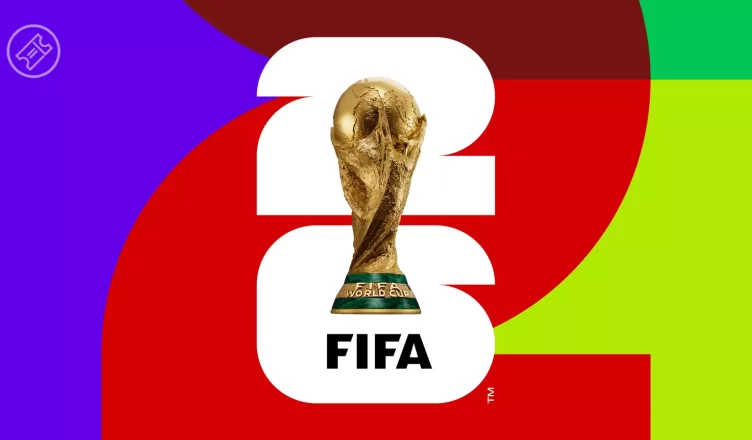
Football’s greatest spectacle returns today.
From the historic Estadio Azteca in Mexico City, the first whistle of the 2026 FIFA World Cup will signal the beginning of a month-long celebration of sport, passion, national pride and global unity. For the first time in history, the tournament is being hosted by three nations—the United States, Canada and Mexico—and for the first time, 48 teams will compete for football’s most coveted prize.
By the time the final is played on July 19, one nation will have etched its name into football history. The question now is: who will it be?
The nations that have conquered the world
Since Uruguay hosted and won the inaugural World Cup in 1930, only eight countries have lifted the famous trophy.
FIFA World Cup winners
| Country | Titles |
|---|---|
| Brazil | 5 |
| Germany | 4 |
| Italy | 4 |
| Argentina | 3 |
| France | 2 |
| Uruguay | 2 |
| England | 1 |
| Spain | 1 |
Brazil remain the most successful nation in World Cup history, while Argentina arrive in North America as defending champions following their triumph in Qatar four years ago.
The list also tells another story.
Despite decades of near misses and memorable performances, no African nation has yet won the tournament. The deepest runs have come from Morocco’s historic semi-final appearance in 2022 and earlier quarter-final runs by Cameroon, Senegal and Ghana.
The dream remains alive.
Why this World Cup is different
The 2026 tournament represents the biggest transformation in World Cup history.
Instead of 32 teams, there are now 48. Instead of 64 matches, there will be 104. More nations, more stories, more opportunities for surprises and perhaps more chances for emerging football powers to challenge the traditional elite.
Several countries will make their World Cup debuts, while others are returning after long absences.
For football purists, the expanded format raises questions about quality. For many nations, however, it represents long-awaited inclusion.
The favourites: who looks strongest?
Predicting a World Cup winner has never been easy.
The tournament has a habit of humbling favourites and elevating outsiders. Yet some teams appear better positioned than others.
Argentina
The defending champions possess something few teams can match: experience of winning.
Lionel Messi is expected to play in his sixth World Cup and remains the emotional heartbeat of the Argentine side. Around him is a mature squad that understands tournament football. Argentina know what it takes to navigate pressure, expectation and knockout football.
Portugal
Portugal may be the most complete squad entering the tournament.
For years, Portugal depended heavily on Cristiano Ronaldo.
That is no longer the case.
Today, Ronaldo is part of a much broader collection of world-class talent. Bruno Fernandes controls games from midfield. Bernardo Silva offers creativity and intelligence. Rúben Dias anchors the defence. Diogo Costa is regarded as one of Europe’s finest goalkeepers. The squad is deep, experienced and tactically flexible.
Ironically, Ronaldo’s greatest chance of winning a World Cup may have arrived at the twilight of his career because Portugal no longer needs him to carry the team alone.
France
No nation has demonstrated greater consistency at major tournaments in recent years.
France continue to produce extraordinary talent and possess quality in every department. Their blend of youth, athleticism and experience makes them genuine contenders once again.
Brazil
The world’s most successful football nation enters every World Cup carrying immense expectation.
Brazil’s squad is packed with attacking talent and, as always, they will be among the favourites. Yet expectations have become a burden. The Seleção have not won the trophy since 2002, an eternity by Brazilian standards.
Spain
Spain arrive with perhaps the most exciting young generation in world football.
Their technical style remains intact, but there is now greater directness and attacking ambition. Many analysts believe they have the balance required to go all the way.
England
England’s challenge is no longer talent.
It is temperament.
For decades, English football has produced gifted squads only to fall short at decisive moments. This tournament offers another opportunity to end a wait stretching back to 1966.
The dark horses
Every World Cup produces surprises.
This year’s tournament could see strong runs from:
- Morocco
- Senegal
- Croatia
- Netherlands
- Colombia
- Uruguay
Morocco, in particular, have shown that African teams can compete with the world’s best when organisation, talent and belief converge.
Africa’s hopes
Africa enters the tournament with perhaps its strongest collection of teams ever assembled.
Morocco’s success in Qatar changed perceptions about what is possible. Senegal remain formidable. Ghana possess experience. Egypt have quality. Algeria return with ambition.
The continent’s challenge is no longer simply reaching the knockout stages.
The conversation has shifted toward whether an African nation can finally reach a World Cup final.
Opening fixtures to watch
The tournament begins today with:
Thursday, June 11
- Mexico vs South Africa
Friday, June 12
- Korea Republic vs Czechia
- Canada vs Bosnia and Herzegovina
Saturday, June 13
- United States vs Paraguay
- Qatar vs Switzerland
- Brazil vs Morocco
Sunday, June 14
- Haiti vs Scotland
- Australia vs Türkiye
- Germany vs Curaçao
- Netherlands vs Japan
Among the standout early fixtures expected later in the group stage are Spain against Uruguay, France against Senegal, and Argentina against Algeria.
Players who could define the tournament
Every World Cup creates heroes.
Some arrive as stars. Others emerge unexpectedly.
This year, much attention will focus on:
- Lionel Messi (Argentina)
- Cristiano Ronaldo (Portugal)
- Kylian Mbappé (France)
- Vinícius Júnior (Brazil)
- Jude Bellingham (England)
- Lamine Yamal (Spain)
- Achraf Hakimi (Morocco)
- Victor Osimhen’s absence remains a major talking point for Nigerian football supporters following the Super Eagles’ failure to qualify.
The tournament may also introduce the world to new stars whose names are not yet household conversations.
That is one of football’s enduring gifts.
More than football
The World Cup is often described as the biggest sporting event on earth.
Yet it is more than a sporting competition.
For a month, billions of people from different races, religions, languages and political systems will focus on the same event. Nations will celebrate together, grieve together and dream together.
At a time when the world appears increasingly divided, the World Cup remains one of the few occasions capable of reminding humanity of its shared passions.
The trophy will eventually belong to one nation.
The memories will belong to the world.
The Conscience Call
The World Cup reminds us that greatness is rarely accidental.
Champions are built through preparation, discipline, teamwork and resilience.
Those lessons apply beyond football. They apply to nations, institutions and individuals. The countries that lift trophies are often those that invest patiently in development long before the spotlight arrives.
The same principle holds true for societies.
Questions for the Nation
- What lessons can Nigeria learn from nations that consistently succeed in football development?
- Why has Africa yet to produce a World Cup champion?
- Could 2026 finally be the year an African team reaches the final?
- Which nation do you believe will lift the trophy on July 19?
- Will the expanded 48-team format strengthen or weaken the tournament?