


“An informed citizenry remains the strongest defence of any democracy.”
Good morning, Nigeria.
Welcome to today’s edition of The Conscience Morning Brief, your curated roundup of the most important developments from Nigeria, Africa and the wider world over the past 24 hours.
Top Nigerian stories
State police moves closer to reality after Senate’s historic vote
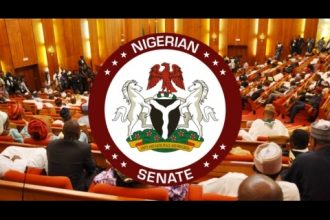
Nigeria moved a step closer to one of its most significant constitutional reforms since 1999 after the Senate passed the State Police Bill, paving the way for states to establish their own police services alongside the federal force. The proposal now awaits consideration by state Houses of Assembly as part of the constitutional amendment process.
The legislation includes provisions allowing governors to appoint commissioners of police, while also introducing safeguards against political abuse.
Why it matters: For decades, Nigerians have debated whether a centrally controlled police force can adequately respond to local security threats. The next battleground will be the states, where ratification is required.
EFCC prepares terrorism financing case against Miyetti Allah leader
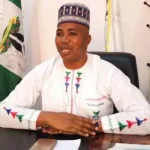
The Economic and Financial Crimes Commission is set to arraign Miyetti Allah Kautal Hore President Bello Bodejo over allegations involving money laundering and terrorism financing linked to approximately $2.53 million.
The case is expected to attract national attention because of its potential implications for ongoing efforts to disrupt financial networks linked to insecurity and violent extremism.
Why it matters: Beyond the individual case, the prosecution could become a major test of Nigeria’s ability to trace and prosecute alleged terror financing networks.
U.S. identifies Nigerian businessman, three Nigerian firms in terrorism financing sanctions
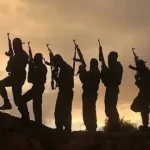
The United States has named a Nigerian national and three Nigerian companies among individuals and entities designated for allegedly facilitating financial transactions linked to ISIS operations.
The action forms part of a wider international effort targeting financial channels used by extremist groups across Africa, Europe and the Middle East.
Why it matters: The development underscores growing international scrutiny of financial flows connected to terrorism in West Africa.
World Cup 2026
Ronaldo keeps rewriting football history
Cristiano Ronaldo continues to dominate headlines after becoming the first player in history to score in six different FIFA World Cups.
The Portuguese captain’s latest milestone has further strengthened his place among the greatest footballers the sport has ever produced.
Why it matters: At 41, Ronaldo is not merely participating in another World Cup; he is redefining longevity at the highest level of football.
Knockout race intensifies across the groups
The qualification picture is becoming clearer as the group stage enters a decisive phase.
Several traditional powers have already strengthened their positions, while others face must-win encounters to keep their World Cup hopes alive. Attention is increasingly turning from individual results to possible Round of 32 match-ups and potential heavyweight clashes later in the tournament.
Why it matters: Every point now carries greater significance as teams begin calculating qualification scenarios and group positions.
England, Portugal and Colombia remain under the spotlight
England’s campaign remains one of the major talking points of the tournament, while Portugal continue to balance expectations with results.
Colombia, meanwhile, have quietly emerged as one of the strongest teams of the group stage and are increasingly attracting attention as potential dark horses.
Why it matters: The World Cup narrative is beginning to shift from favourites to genuine contenders.
World news
Political transition gathers pace in the United Kingdom
The race to succeed outgoing British Prime Minister Keir Starmer continues to dominate political discussions in the UK.
Starmer is expected to remain in Parliament after leaving Downing Street, while attention increasingly focuses on the leadership transition within the Labour Party and what it could mean for Britain’s domestic and foreign policy direction.
Why it matters: Britain remains one of Nigeria’s most important diplomatic and economic partners. Leadership changes in London often have implications for trade, immigration and foreign policy.
Energy markets stabilise after Middle East tensions ease
Global energy markets continued to settle following the easing of tensions involving the United States and Iran.
Industry leaders say natural gas and oil markets are gradually returning to normal, while renewed tanker movements through the Strait of Hormuz have helped calm supply concerns.
Why it matters: Stable energy markets could ease inflationary pressures worldwide and reduce volatility in oil-dependent economies such as Nigeria.
Business and economy
Oil prices retreat further
Crude oil prices remained under pressure as traders responded to increased supply flows and improving shipping activity in the Gulf region. Analysts say markets are beginning to price in a period of near-term oversupply after weeks of geopolitical uncertainty.
Why it matters: Lower oil prices may provide relief for consumers globally, but they also pose revenue challenges for oil-exporting countries like Nigeria.
What to watch today
- Reactions from governors and state assemblies to the State Police Bill.
- Further developments in the EFCC’s case against Bello Bodejo.
- Additional details from the U.S. sanctions targeting alleged ISIS financiers.
- Crucial World Cup fixtures that could determine qualification places.
- Developments in the UK Labour leadership transition.
- Movements in global oil prices and their implications for Nigeria’s economy.
Questions for the nation
- Can state police improve security without becoming tools of political intimidation?
- What reforms are needed to strengthen oversight of security and intelligence institutions?
- How effectively is Nigeria tracking and disrupting terror financing networks?
- Why does insecurity remain widespread despite increased spending on security?
- Can the Federal Government’s digital ambitions succeed without reliable electricity and affordable internet access?
- What practical steps are being taken to address Nigeria’s persistent power supply crisis?
The Conscience Call
Yesterday’s passage of the State Police Bill may eventually be remembered as a turning point in Nigeria’s constitutional history.
Yet creating new institutions is often easier than ensuring they work. The real challenge lies ahead: building a policing structure that is professional, accountable, locally responsive and resistant to political manipulation.
Security reform is not measured by the number of laws passed. It is measured by whether citizens feel safer in their homes, farms, schools and communities.
In addition, the allegations against the Miyetti Allah president serve as a reminder that insecurity is sustained not only by those who carry weapons but also by those who allegedly move, conceal or provide access to funds. If Nigeria is serious about defeating terrorism and banditry, financial accountability must become as important as battlefield victories.
The Conscience Thought
“Good governance is not proven by promises made in capital cities; it is proven by the safety, dignity and opportunity experienced in ordinary communities.”
That is your The Conscience Morning Brief for Thursday, June 25, 2026.
Stay informed. Stay engaged. Stay conscience-driven.