

The United States Government has sanctioned a Nigerian national and three Nigeria-based financial businesses over allegations that they served as part of an international network used to move funds for the Islamic State of Iraq and Syria (ISIS).
The move places Nigeria at the centre of a fresh global counter-terrorism investigation and has reignited concerns about the role of informal financial channels in funding extremist groups operating across West Africa.
The U.S. Department of State announced the sanctions as part of a broader action targeting three individuals and six companies operating across Europe, the Middle East and Africa that American authorities say facilitated the movement of money for ISIS-linked activities.
Nigerian named in sanctions action
At the centre of the Nigerian component of the sanctions is Mukhtar Adamu Muhammad, a Lagos-based Nigerian identified by U.S. authorities as an alleged financial facilitator linked to ISIS-West Africa.
According to the designation, Muhammad allegedly used money exchange businesses operating in Nigeria as channels for moving funds connected to the terrorist organisation.
The United States also designated three Nigerian companies allegedly linked to his operations:
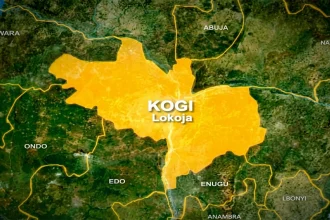
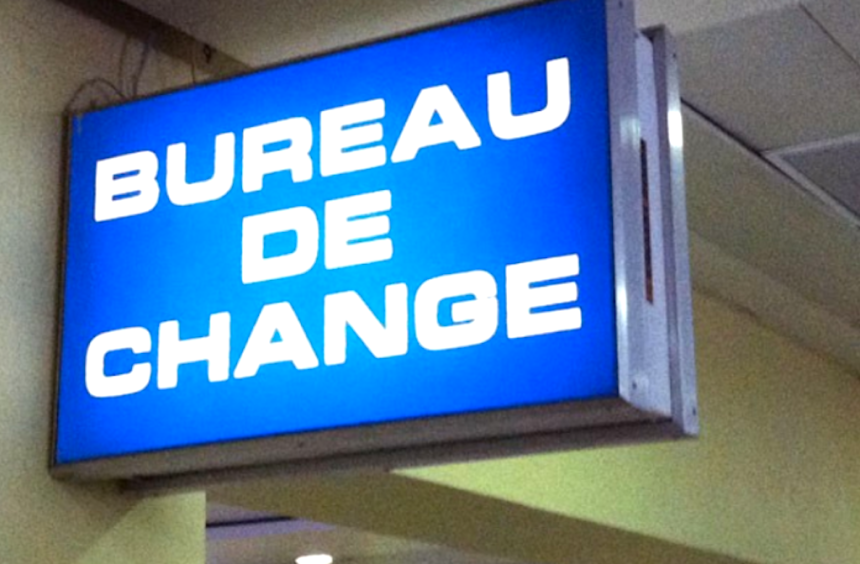
- Generation Currency Bureau De Change Limited (Lagos)
- Nine to Nine Exchange Bureau De Change Limited (Ikeja, Lagos)
- Manhattan Bureau De Change Limited (Kano)
American authorities claim the businesses formed part of a broader financial infrastructure used to facilitate transactions connected to ISIS activities.
Global network exposed
The sanctions extended beyond Nigeria to include individuals and entities operating in France, Syria and Türkiye.
According to U.S. officials, the network allegedly enabled ISIS supporters and operatives to transfer money across multiple countries using both traditional money exchange channels and cryptocurrency platforms.
The U.S. State Department described the network as one spanning Europe, the Middle East and West Africa.
“Today’s designations target three individuals and six entities operating across Europe, the Middle East, and West Africa who have enabled ISIS to move money across borders,” the department said.
Among those sanctioned were a France-based ISIS facilitator and a Syria-based operator accused of transferring funds through cryptocurrency transactions.
Why the sanctions matter
The sanctions effectively freeze any assets the designated individuals or entities may have under U.S. jurisdiction and prohibit American citizens and businesses from engaging in transactions with them.
Financial institutions worldwide often treat such sanctions seriously because of the risk of secondary sanctions and reputational consequences.
For Nigeria, the development raises wider questions about financial oversight and the monitoring of money transfer operations, particularly in a region where terrorist organisations have increasingly adapted to modern financial systems to evade detection.
Security analysts have repeatedly warned that terrorist groups no longer rely solely on cash couriers but increasingly exploit digital platforms, exchange services and cross-border financial networks.
US highlights cooperation with Nigeria
Despite the sanctions announcement, Washington emphasised its security partnership with Nigeria.
The United States noted that Nigeria recently collaborated in a joint operation that led to the killing of Abu-Bilal al-Minuki, described by American authorities as the second-highest-ranking ISIS leader globally.
U.S. officials said the latest sanctions demonstrate their determination to pursue ISIS financiers regardless of where they operate.
“We will continue to use every diplomatic and legal tool available to hold ISIS and its supporters accountable — wherever they operate and however they move money,” the State Department stated.
Growing focus on terrorist financing
The latest action is a reflection of a growing international shift from targeting only terrorists on the battlefield to dismantling the financial networks that sustain extremist operations.
Counter-terrorism experts often argue that disrupting funding channels can be as effective as military operations in weakening terrorist organisations.
With ISIS-linked groups continuing to pose security threats across parts of West Africa, the sanctions are likely to increase scrutiny of financial institutions, bureau de change operators and cross-border money transfer systems throughout the region.
Whether the allegations ultimately lead to criminal prosecutions or further investigations remains to be seen, but the sanctions place renewed focus on the financial dimensions of terrorism and the challenge of preventing extremist groups from accessing global money networks.
The Conscience Call
Terrorism survives not only because of guns and fighters but because of money.
Every successful terrorist operation requires funding, logistics, communications and financial support structures. That is why allegations of terrorist financing deserve as much public attention as military operations against insurgents.
The latest U.S. sanctions raise important questions for Nigerian regulators and security agencies. If financial channels are being exploited by extremist groups, then stronger oversight, intelligence-sharing and enforcement mechanisms become matters of national security.
The fight against terrorism cannot be won on the battlefield alone. It must also be fought in banking halls, exchange centres, digital payment systems and every channel through which money moves.
Questions for the Nation
- Have Nigerian authorities independently investigated the allegations contained in the U.S. sanctions announcement?
- What safeguards currently exist to prevent bureau de change operators from being exploited by terrorist financiers?
- How effective is inter-agency cooperation between security agencies and financial regulators in tracking suspicious transactions?
- Are current anti-money laundering and counter-terrorism financing regulations sufficient to address emerging threats?
- What lessons can Nigeria draw from this case to strengthen its financial security architecture?
The Conscience Times
Nurturing a Conscience-Driven Society