
Nigeria could face a complete suspension of United States assistance after the US House of Representatives approved an amendment seeking to withhold 100 per cent of American aid to the country until the Federal Government demonstrates concrete progress in addressing insecurity and holding perpetrators of violence accountable.
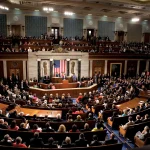
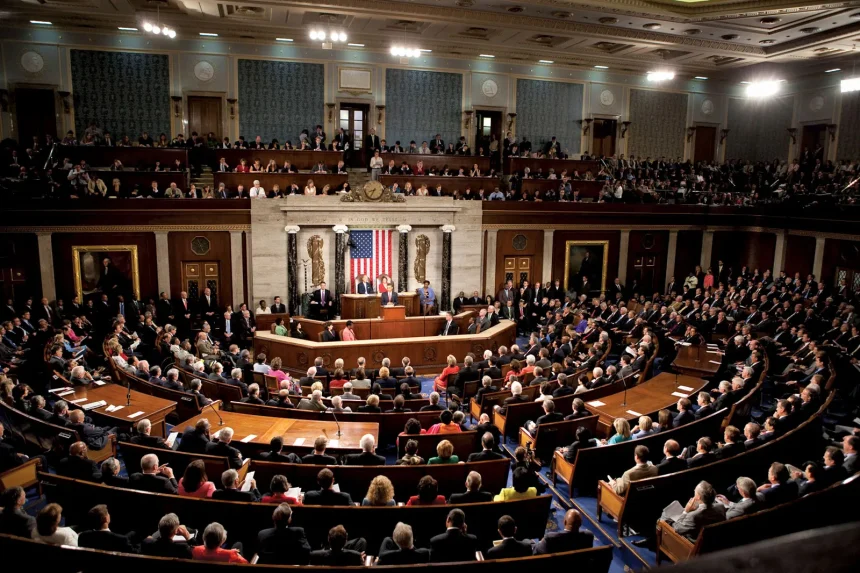
The amendment, sponsored by Republican Congressman Gregory Steube of Florida, was adopted by voice vote on Wednesday during consideration of the Fiscal Year 2027 State, Foreign Operations and Related Programs Appropriations Bill.
The broader spending legislation was subsequently passed by the House in a narrow 217-209 vote, setting the stage for what could become one of the most consequential developments in US-Nigeria relations in recent years.
Announcing the passage of his amendment, Steube said American taxpayers should not continue funding governments that fail to adequately protect vulnerable communities.
“My amendment to withhold 100% of U.S. aid to Nigeria until its government stops the slaughter of Christians has passed.
“American taxpayers should never bankroll governments that turn a blind eye while Christians are abducted, tortured, and murdered. No more wasteful foreign aid!” he wrote on X.
The amendment strengthens an earlier provision in the bill that proposed withholding 50 per cent of US assistance to Nigeria until the US Secretary of State certifies that the Nigerian government has taken effective steps to prevent violence, respond to attacks and bring perpetrators to justice.
Steube’s amendment raises the threshold from 50 per cent to 100 per cent, while retaining the same certification requirements.
Speaking on the House floor before the vote, the congressman argued that withholding only half of the assistance would amount to rewarding a government that had failed in one of its most basic responsibilities.
He described Nigeria as a country facing a severe security crisis and insisted that foreign aid should be tied to accountability and measurable outcomes.
According to him, the amendment does not introduce new conditions but merely strengthens existing provisions contained in the legislation.
Steube also linked the proposal to domestic fiscal concerns in the United States, questioning why Washington should continue sending money abroad while the country’s national debt approaches $40 trillion.
Measure still faces major hurdles
Despite the House vote, the proposal does not immediately affect US assistance to Nigeria.
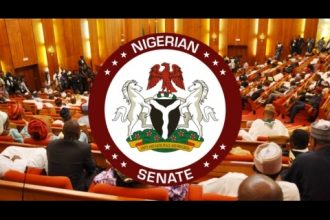
For the amendment to become law, it must still pass through the United States Senate and be signed by President Donald Trump as part of the final appropriations legislation.
The Senate may choose to amend, reject or negotiate changes to the House version before a final bill emerges.
Until that process is completed, existing US assistance programmes to Nigeria remain unaffected.
Growing scrutiny of Nigeria’s security record
The House vote represents the latest chapter in growing American scrutiny of Nigeria’s security situation and allegations of religious persecution.
The development comes after President Trump redesignated Nigeria as a Country of Particular Concern (CPC) in 2025 over allegations relating to the persecution of Christians and violations of religious freedom.
It also follows a period of heightened diplomatic tension between both countries, including controversy surrounding a US military strike on Nigerian territory on Christmas Day last year.
Despite those tensions, Nigeria and the United States have continued to maintain security cooperation, particularly in counterterrorism operations targeting extremist groups operating in parts of northern Nigeria.
US officials have repeatedly identified security, religious freedom and counterterrorism as key areas of engagement with Nigeria.
Supporters of the amendment argue that increasing attacks on Christian communities justify stronger pressure on Abuja.
Successive Nigerian governments, however, have maintained that the country’s security challenges are more complex than religious persecution alone, pointing to terrorism, banditry, kidnapping, communal clashes and criminal violence affecting citizens across different religious and ethnic groups.
Security experts have similarly argued that while some attacks may contain religious dimensions, Nigeria’s insecurity crisis is rooted in a combination of governance failures, poverty, weak law enforcement, extremist violence, resource conflicts and organised criminality.
What could be affected?
The United States remains one of Nigeria’s most significant development partners.
American assistance supports programmes across healthcare, humanitarian relief, food security, governance, education, economic development and security cooperation.
Analysts say the eventual impact of any aid suspension would depend on the final wording of the legislation, possible exemptions approved by Congress, and the categories of assistance ultimately covered.
While security cooperation may continue under separate arrangements, a broad suspension of development assistance could affect ongoing projects and humanitarian interventions if the measure eventually becomes law.
Diplomatic implications
The House action is likely to increase pressure on the Nigerian government to demonstrate tangible progress in addressing insecurity, particularly amid growing international concern over terrorist attacks, kidnappings, communal violence and attacks on religious communities.
It also underscores how domestic security challenges can increasingly influence a country’s diplomatic standing, foreign assistance profile and international reputation.
Although the amendment is still several legislative steps away from becoming law, its passage in the House sends a strong political signal about growing concern within Washington over developments in Nigeria.
The Conscience Call
Whether one agrees with the US House’s approach or not, the message behind the vote is unmistakable: insecurity is no longer viewed merely as a domestic challenge. It is increasingly becoming a diplomatic, economic and international relations issue.
Nigeria’s response should not be motivated solely by the possibility of losing foreign assistance. The protection of lives and property is first and foremost a constitutional responsibility.
A nation that cannot adequately secure its citizens risks more than foreign aid. It risks investor confidence, economic growth, national cohesion and international credibility.
The ultimate solution lies not in external pressure but in building a security architecture capable of protecting every Nigerian regardless of faith, ethnicity or region.