

“The world belongs to those who stay informed, stay prepared, and stay engaged.”
Good morning, Nigeria.
Welcome to today’s edition of The Conscience Morning Brief, your concise roundup of the major stories shaping Nigeria, Africa and the world.
Top Nigerian stories
Nigeria to take greater control of humanitarian response
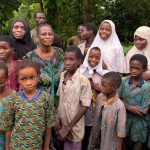
The Federal Government has announced plans to assume greater leadership of the country’s humanitarian response as the United Nations gradually transitions from direct operational support to a more advisory role. Humanitarian Affairs Minister Bernard Doro said Nigeria would increasingly coordinate and finance its own humanitarian interventions while continuing to receive technical support from international partners.
Why it matters: The move signals Nigeria’s intention to strengthen institutional capacity to respond to displacement, flooding, food insecurity and other humanitarian emergencies without overreliance on foreign assistance.
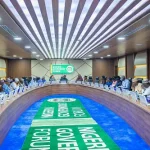
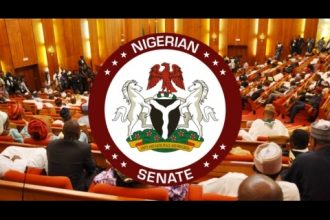
National Assembly Open Week begins
The National Assembly has commenced its 2026 Open Week, an initiative aimed at promoting transparency, public engagement and legislative accountability. Running from July 14 to 16, the programme allows citizens to interact more closely with lawmakers and understand the legislative process.
Why it matters: Greater legislative openness can strengthen public trust and encourage more active citizen participation in governance.
FG suspends planned WAEC, NECO fee increase
The Federal Government has suspended the proposed increase in registration fees for the 2027 WAEC and NECO examinations following public criticism. The Ministry of Education said the proposal would be reviewed before any final decision is taken.
Why it matters: The decision offers temporary relief to millions of Nigerian families already struggling with rising education costs.
FIFA World Cup 2026
Spain beat France to reach World Cup final
Spain produced one of their most complete performances of the tournament to defeat France 2-0 and become the first team to qualify for the 2026 FIFA World Cup final.
Mikel Oyarzabal converted a first-half penalty before Pedro Porro sealed victory after the break as Spain’s disciplined defence frustrated Kylian Mbappé and the French attack throughout the contest. Spain are now unbeaten in 37 matches and will face either England or Argentina in Sunday’s final.
Why it matters: Spain’s blend of youth and experience has made them favourites to lift the World Cup for the second time.
England and Argentina renew famous rivalry tonight
Attention now shifts to the second semi-final as England take on defending champions Argentina for a place in the final.
The encounter brings together two football heavyweights, with Jude Bellingham leading England’s new generation against Lionel Messi, who is seeking to guide Argentina to back-to-back World Cup titles.
Why it matters: Beyond the football, few international fixtures carry as much history and emotion as England versus Argentina.
World
Global focus remains on humanitarian funding
International aid agencies continue to warn of funding shortfalls affecting humanitarian operations worldwide, prompting countries such as Nigeria to explore more sustainable domestic funding models for emergency response.
Why it matters: Reduced donor funding means vulnerable nations may increasingly need to finance disaster response and humanitarian relief from domestic resources.
Business & Economy
Oil production optimism continues
Attention remains on Nigeria’s rising crude oil production after June output reached its highest level in more than six years, boosting optimism over government revenue and foreign exchange earnings. Analysts, however, say sustained production must be matched by reforms that improve electricity supply, infrastructure and living standards.
What to watch today
- England vs Argentina in the second World Cup semi-final.
- Activities at the National Assembly Open Week.
- Further implementation plans for Nigeria’s humanitarian transition.
- Reactions to the suspension of the proposed WAEC and NECO fee increase.
- Developments in Nigeria’s security and economic reforms.
The Conscience Call
The Federal Government’s decision to take greater ownership of humanitarian response reflects an important principle: nations must build institutions that can withstand crises without perpetual dependence on external support.
The same philosophy should apply across other sectors. Whether in security, healthcare, education or infrastructure, Nigeria must continue strengthening domestic capacity while maintaining productive international partnerships.
Citizens also expect that increased oil revenues and stronger institutions will translate into tangible improvements—stable electricity, reliable internet connectivity, quality education, safer communities and better public services.
The Conscience Thought
“Strong institutions are built not when challenges disappear, but when leaders prepare for them before they arrive.”
That is your The Conscience Morning Brief for Wednesday, July 15, 2026.
Stay informed. Stay engaged. Stay conscience-driven.