


Good morning
- Tinubu: The generation of June 12 secured democracy, our generation must secure prosperity
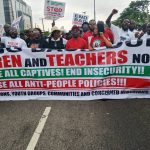
- Democracy Day protesters demand action on insecurity and hardship
- National honours revive memories of the June 12 struggle
- Security remains Nigeria’s biggest challenge
- State police debate gathers momentum
- Local government autonomy remains in focus
- United States make statement with emphatic opening victory
- Canada earn historic point in dramatic opener
- Prosperity becomes government’s new economic narrative
- By the numbers
- Quote of the day
- Today to watch
- Nigeria
- World Cup
- The Conscience takeaway
Democracy Day 2026 has come and gone, but the conversations it sparked are only just beginning.
President Bola Tinubu used the occasion to redefine Nigeria’s next national mission. Protesters took to the streets demanding security and economic relief. Lawmakers pushed forward one of the country’s most consequential security reforms. And on the global stage, the FIFA World Cup delivered drama as host nations Canada and the United States launched their campaigns.
Here is your essential briefing for Saturday, June 13.
Tinubu: The generation of June 12 secured democracy, our generation must secure prosperity
President Bola Ahmed Tinubu delivered the defining message of Democracy Day 2026 when he declared that the task facing today’s Nigerians is no longer the struggle for democracy but the pursuit of economic prosperity.
In a speech that combined tributes to June 12 heroes with a defence of his administration’s economic reforms, Tinubu argued that democracy must be measured by improvements in citizens’ lives, jobs, security and opportunity. He also announced national honours for pro-democracy activists and journalists while defending ongoing economic and security policies.
Why it matters
This is likely to become the central political message of the Tinubu administration heading into the next phase of its tenure.
Democracy Day protesters demand action on insecurity and hardship
Across parts of the country, civil society organisations, labour activists and youth groups marked June 12 with protests over insecurity, inflation and worsening living conditions.
In Lagos, human rights lawyer Femi Falana, musician Falz and other activists led demonstrators who called for the release of abducted Nigerians and stronger action against kidnappers and bandits. Protesters argued that democratic governance must translate into security and improved welfare for citizens.
Why it matters
The demonstrations highlight growing public pressure on government to deliver tangible improvements in security and living standards.
National honours revive memories of the June 12 struggle
One of the major announcements from the President’s address was the recognition of dozens of journalists, activists and military officers who played roles in Nigeria’s democratic struggle.
The move has renewed public discussion about the sacrifices that paved the way for the country’s return to civilian rule and the responsibility of today’s leaders to protect democratic institutions.
Why it matters
June 12 remains one of the most powerful symbols of national unity and democratic resistance in Nigeria’s history.
Security remains Nigeria’s biggest challenge
While Democracy Day celebrations dominated the news cycle, security concerns remained at the centre of national discourse.
The President cited government efforts against terrorism and banditry, while protesters argued that kidnappings and violent attacks continue to threaten communities across the country.
Why it matters
Security remains the issue most likely to shape public perceptions of governance over the coming months.
State police debate gathers momentum
Momentum continues to build behind efforts to decentralise policing in Nigeria as conversations around state police gained renewed attention during Democracy Day discussions.
Supporters argue that localised policing could improve intelligence gathering and response times, while critics warn about possible political abuse and funding concerns.
Why it matters
The debate could lead to one of the most significant constitutional and security reforms since the return to democracy.
Local government autonomy remains in focus
President Tinubu again linked grassroots insecurity and underdevelopment to weaknesses in local government administration.
His comments reinforce the Federal Government’s push for greater autonomy and financial independence for Nigeria’s 774 local councils.
Why it matters
The effectiveness of local government reforms could influence development outcomes across the country.
United States make statement with emphatic opening victory
Co-hosts United States launched their World Cup campaign in style with a commanding 4-1 victory over Paraguay.
Folarin Balogun scored twice, while Christian Pulisic played a key role as Mauricio Pochettino’s side produced one of the strongest performances of the tournament’s opening days.
Why it matters
The result immediately strengthens belief that the hosts could make a deep run in the tournament.
Canada earn historic point in dramatic opener
Canada secured their first-ever World Cup point with a 1-1 draw against Bosnia and Herzegovina.
Substitute Cyle Larin scored a crucial equaliser as the Canadians fought back after falling behind, giving home supporters a memorable moment in Toronto.
Why it matters
The result keeps Canada’s hopes alive and represents a landmark achievement in the country’s World Cup history.
Prosperity becomes government’s new economic narrative
Beyond the headlines, one of the most significant developments from Thursday was the administration’s effort to reposition economic reforms as the pathway to long-term prosperity.
The President pointed to increased revenues, infrastructure investment, energy reforms and non-oil export growth as evidence that the economy is moving toward greater stability.
Why it matters
The success or failure of that narrative will depend on whether ordinary Nigerians begin to feel meaningful improvements in their daily lives.
By the numbers
27
Years of uninterrupted civilian rule since Nigeria’s return to democracy in 1999.
124,000+
Former fighters and dependants who have reportedly surrendered through Operation Safe Corridor since 2023, according to President Tinubu.
13,000+
Terrorists reportedly neutralised over the past year, according to figures cited by the President.
4-1
United States’ winning scoreline against Paraguay in their World Cup opener.
1-1
Canada’s result against Bosnia and Herzegovina in their opening World Cup match.
Quote of the day
“The generation of June 12 secured democracy. Our generation must secure prosperity.”
— President Bola Ahmed Tinubu
Today to watch
Nigeria
- Reactions from opposition parties and civil society groups to the President’s Democracy Day speech.
- Further debate on state police and local government autonomy.
- Security updates regarding kidnapping cases across the country.
World Cup
- Analysis of the United States’ impressive opening performance.
- Canada’s preparations for their second group match.
- Group-stage fixtures as more nations begin their campaigns.
The Conscience takeaway
Democracy Day 2026 revealed a nation at a crossroads.
The government’s message was one of patience, reform and future prosperity. The protesters’ message was one of urgency, demanding security and economic relief now.
Between those two positions lies the real test of Nigerian democracy: whether political freedom can translate into safer communities, stronger institutions and better living conditions.
The heroes of June 12 secured the right to choose leaders. The challenge before today’s leaders is to ensure that democracy delivers results that citizens can see, feel and trust.
The Conscience Times
Nurturing a Conscience-Driven Society