

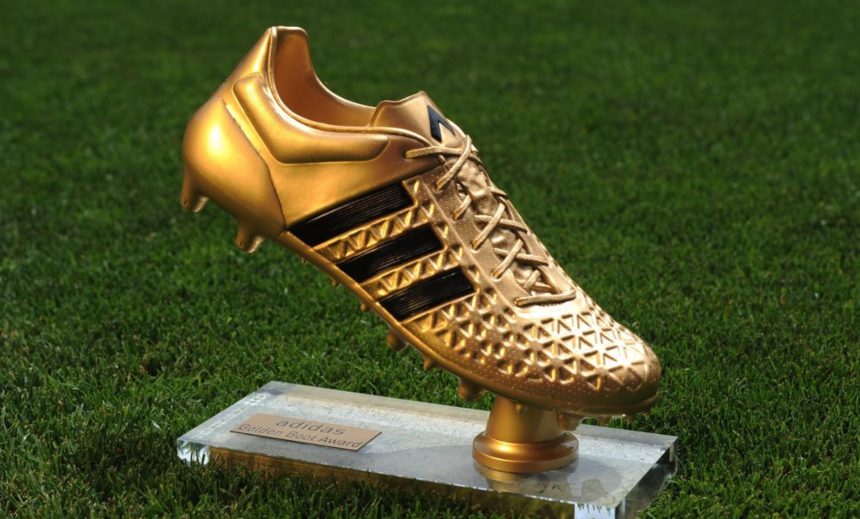
As the FIFA World Cup 2026 gets underway across the United States, Canada and Mexico, another fascinating battle is set to unfold alongside the race for the trophy — the quest for the Golden Boot.
For nearly a century, football’s greatest goalscorers have used the World Cup stage to cement their place in history, delivering unforgettable performances that have often become as memorable as the tournament itself.
From Argentina’s Guillermo Stabile in the inaugural World Cup in 1930 to France’s Kylian Mbappé in Qatar 2022, the tournament’s leading scorers have provided moments that transcended generations and shaped football’s global narrative.
With a new edition of the competition now beginning, the question once again arises: who will become the next name on one of football’s most prestigious lists?
A legacy that began in 1930
The tradition of World Cup goalscoring excellence dates back to the first tournament in Uruguay, where Argentina’s Guillermo Stabile scored eight goals despite missing his country’s opening match.
His remarkable feat set the tone for what would become one of the competition’s most celebrated individual achievements.
Over the decades, several players have produced extraordinary scoring campaigns, but none has surpassed the record established by France’s Just Fontaine at the 1958 World Cup in Sweden.
Fontaine scored an astonishing 13 goals in just six matches, a record that remains untouched nearly seven decades later.
Hungary’s Sandor Kocsis came closest with 11 goals in 1954, while Germany’s Gerd Muller scored 10 in 1970 and Brazil’s Ademir de Menezes netted nine in 1950.
The enduring nature of Fontaine’s record highlights just how difficult it is to maintain elite goalscoring form throughout a World Cup campaign.
The era of shared Golden Boots
While some tournaments produced dominant individual scorers, others witnessed tightly contested races.
The 1962 World Cup remains unique in history, with six players sharing the distinction of top scorer after each finished with four goals.
Florian Albert, Garrincha, Valentin Ivanov, Drazen Jerkovic, Leonel Sanchez and Vava all ended the tournament level, reflecting the competitive balance that characterised the competition in Chile.
A similar situation occurred in 1994 when Russia’s Oleg Salenko and Bulgaria’s Hristo Stoichkov shared the honours with six goals each.
The 2010 World Cup in South Africa also produced a three-way tie involving Thomas Muller, Wesley Sneijder and David Villa, each scoring five goals.
These tournaments demonstrated that while football celebrates individual brilliance, success often emerges from collective team performances.
Icons who used the World Cup to build their legacy
Many Golden Boot winners were already established stars, but the World Cup elevated them to legendary status.
Portugal’s Eusebio captivated audiences with nine goals in 1966, carrying his nation to an unexpected third-place finish.
Italy’s Paolo Rossi became a national hero in 1982 after leading the Azzurri to World Cup glory.
England’s Gary Lineker claimed the Golden Boot in 1986, while Italy’s Salvatore “Toto” Schillaci emerged from relative obscurity to become the story of Italia ’90.
Brazilian icon Ronaldo’s eight-goal haul in 2002 completed one of football’s greatest redemption stories after the disappointment of the 1998 final.
More recently, Colombia’s James Rodriguez announced himself to the world with six goals in 2014, while England captain Harry Kane topped the charts in Russia 2018.
Mbappé sets the standard for a new generation
The most recent Golden Boot winner, Kylian Mbappé, delivered a sensational performance at the 2022 World Cup in Qatar.
The French forward scored eight goals, including a historic hat-trick in the final against Argentina, becoming only the second player ever to achieve the feat in a World Cup final.
At just 23 years old during that tournament, Mbappé established himself as the leading figure of football’s next generation.
As World Cup 2026 begins, he is once again among the favourites to finish as the tournament’s top scorer.
However, competition is expected from a host of elite forwards, including England’s Harry Kane, Argentina’s Julián Álvarez, Portugal’s Gonçalo Ramos, Norway’s Erling Haaland and a new crop of emerging stars eager to seize football’s biggest spotlight.
Can Fontaine’s record finally fall?
One of the most intriguing questions surrounding every World Cup is whether Fontaine’s seemingly untouchable record of 13 goals can finally be broken.
The expanded 48-team tournament format means players could potentially have more matches available than in previous editions, creating fresh opportunities for prolific scorers.
Yet modern football’s tactical sophistication, improved defensive organisation and squad rotation systems make sustained goalscoring runs increasingly difficult.
History suggests that winning the Golden Boot requires more than talent alone. It demands consistency, opportunity, fitness and often a deep tournament run.
As the world turns its attention to North America, the next chapter of World Cup goalscoring history is waiting to be written.
Whether it is an established superstar or an unexpected breakout performer, one player will join a distinguished list that stretches back almost 100 years.
World Cup top scorers by tournament
- 1930 – Guillermo Stabile (Argentina) – 8 goals
- 1934 – Oldrich Nejedly (Czechoslovakia) – 5
- 1938 – Leonidas (Brazil) – 7
- 1950 – Ademir de Menezes (Brazil) – 9
- 1954 – Sandor Kocsis (Hungary) – 11
- 1958 – Just Fontaine (France) – 13
- 1962 – Florian Albert, Garrincha, Valentin Ivanov, Drazen Jerkovic, Leonel Sanchez and Vava – 4
- 1966 – Eusebio (Portugal) – 9
- 1970 – Gerd Muller (West Germany) – 10
- 1974 – Grzegorz Lato (Poland) – 7
- 1978 – Mario Kempes (Argentina) – 6
- 1982 – Paolo Rossi (Italy) – 6
- 1986 – Gary Lineker (England) – 6
- 1990 – Toto Schillaci (Italy) – 6
- 1994 – Oleg Salenko (Russia) and Hristo Stoichkov (Bulgaria) – 6
- 1998 – Davor Suker (Croatia) – 6
- 2002 – Ronaldo (Brazil) – 8
- 2006 – Miroslav Klose (Germany) – 5
- 2010 – Thomas Muller (Germany), Wesley Sneijder (Netherlands) and David Villa (Spain) – 5
- 2014 – James Rodriguez (Colombia) – 6
- 2018 – Harry Kane (England) – 6
- 2022 – Kylian Mbappé (France) – 8
The Conscience Call
Records inspire, but they also remind us that greatness is built through preparation, discipline and consistency. The players who dominate the World Cup scoring charts are not merely talented footballers; they are athletes who seized rare opportunities on the sport’s biggest stage.
As a new generation pursues football glory in 2026, the Golden Boot race serves as a reminder that excellence is never accidental. It is earned through years of dedication, resilience and the courage to perform when the world is watching.
Questions for the Nation
- Can Kylian Mbappé retain the Golden Boot and add to his growing World Cup legacy?
- Will the expanded World Cup format produce a new scoring record?
- Which striker is best positioned to challenge Just Fontaine’s long-standing mark of 13 goals?
- Could World Cup 2026 produce another surprise Golden Boot winner?
- What qualities truly separate great goalscorers from legendary ones?
The Conscience Times
Nurturing a Conscience-Driven Society